In the era of Alexa, Siri and predictive text, people are growing accustomed to having AI assistance in their daily lives. In the workplace, humans work alongside robots to boost productivity and even spare humans from the most dangerous, strenuous and boring tasks. Robots and drones also do package deliveries or act as servers in restaurants. Cars have AI features that help people drive more safely and avoid accidents. So far, the human-machine relationship has seemed harmonious. There often is resistance at first, but, for the most part, the partnership works out.
Uses for AI in supply chain
AI can make sense in supply chain and many related fields:
1. Supply chain. The primary value of AI in supply chains is to provide visibility along the supply chain to identify potential problems and assess ways the supply chain could be improved. Applications include:
- Predictive forecasting: AI can improve data forecasting by providing a comprehensive look at historical data, customer behavior, market trends and additional external factors.
- Improved inventory management: AI can help assess historical sales data, seasonal trends and other factors and recommend the optimal stock levels to predict reorder points.
- Autonomous supply chains: With the use of smart devices and sensors that collect data in real time and AI-driven algorithms, data is processed autonomously, leading to quicker decision-making and precise action-taking in less time.
- Risk management and resilience: AI provides advanced risk management solutions as it continuously analyzes and monitors data to identify potential threats.
- Personalized customer experience: When organizations leverage AI-driven analytics, they can gain a deeper understanding of customer preferences, behaviors and purchasing patterns.

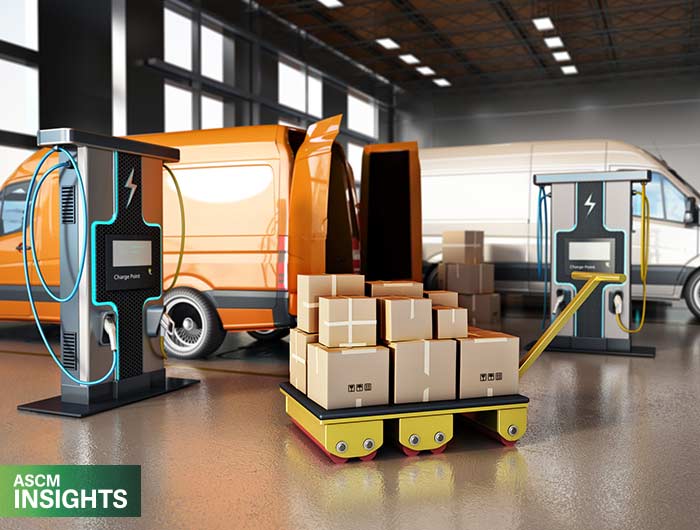
2. Manufacturing: AI can process data for production and throughput optimization, product quality assurance, predictive or preventive maintenance, energy reduction, and other manufacturing functions. Other manufacturing applications for AI include collaborative robots, AI-enhanced design and prototyping, autonomous material handling, and human-machine collaboration.
AI, machine learning and cloud computing have not yet been widely adopted by the manufacturing industry. Data and intellectual-property protection are chief among adoption concerns. However, the technology is making inroads in food and beverage manufacturing — where it contributes to streamlining production processes and enhancing food safety — and precision aerospace manufacturing.
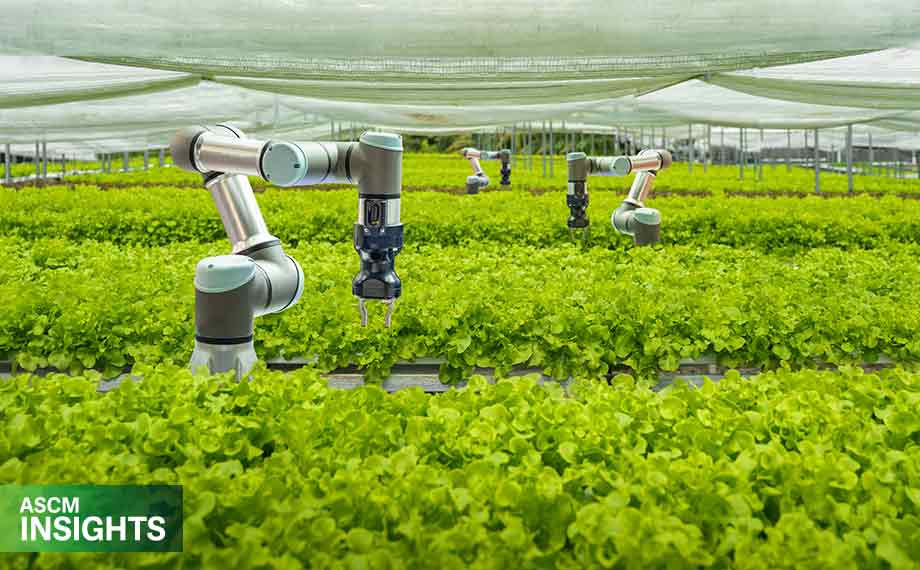
3. Farming. AI can help farmers evaluate when and how much of a certain crop to plant by taking into account soil, market potential, weather forecasts and other variables. In addition, a new internet-of-things system currently is being used to monitor and identify sickness in cattle. The system uses AI and machine learning to monitor animal behavior and detect early signs of sickness. Farmers get real-time access to the data, helping them make rapid decisions and catch cattle illnesses early.
4. Health care. AI has the potential to help medical providers offer more and better care to patients. Capabilities include the following:
- Keeping patients well: AI can help health care professionals better understand the day-to-day patterns and needs of the people they care for, which in turn helps them give patients better feedback and support for staying healthy.
- Early detection: The combination of data from consumer wearables and other medical devices combined with AI analysis can help doctors oversee early-stage heart disease by monitoring and detecting potentially life-threatening episodes at earlier, more treatable stages.
- Evaluation: Using pattern recognition, AI can identify patients at risk of developing a condition or monitor how an ailment is improving or worsening.
- Communication: Medical groups in California and Wisconsin are leveraging AI to read patient messages and draft responses for doctors to approve and send to help cut down on their administrative tasks and improve communication with patients.
- Research: AI can streamline the drug discovery and drug repurposing processes to significantly cut both the time to market for new drugs — which currently is 12 years on average — and their costs.
- Training: AI provides naturalistic training simulations that can be continually adjusted to meet the trainee’s learning needs.
5. Retail. Like other businesses, retailers are leveraging chatbots to offer 24/7 customer service to shoppers. Behind the scenes, AI also optimizes inventory management by predicting demand to prevent overstock or stockouts, thereby improving operational efficiency. Amazon is leveraging AI in some of its warehouses to screen items for damage before orders are shipped to customers to help cut logistics time and costs.
Obstacles to adoption
One of the largest obstacles to adopting AI is human perspectives. Humans worry that AI will take away their jobs. As history shows, technology usually changes jobs, but then humans can take on new, value-added and more interesting tasks that ultimately give humans new skills, higher earning potential and greater job satisfaction.
Beyond that, companies and users worry about what goes into AI and what comes out of it. AI is only as good as the information in its database. Companies need reliable data for AI to use in order to receive effective support from the tool. Furthermore, stakeholders need ways to verify that outputs are accurate and being shared with the proper parties to prevent fraud and security issues.
What’s next for AI in supply chain
As with any technology, it is prudent for companies to not jump headfirst into AI adoption and instead take time to evaluate the tools and how it can support a business. Gartner currently places generative AI at the Peak of Inflated Expectation on its Hype Cycle but expects that the technology will be able to offer transformational benefits within two to five years.
AI already does many things faster and more effectively than humans. It can perform more complete analyses, retain and access information faster, and develop better insights about cause-and-effect situations. So often in business, improvement is defined by improving efficiency and cutting costs, and AI can do just that — and help humans to do more, discover more and move industry forward.
Learn how to leverage emerging supply chain technologies for improved operational performance with the ASCM Supply Chain Technology Certificate.
Editor's note: This article is an updated version of the original blog, which was first published in 2023.