ASCM is committed to empowering supply chain professionals with a universal, trusted standard—the SCOR Digital Standard (SCOR DS). The foundation of SCOR is to provide a consistent process framework that all supply chain professionals can use to assess, improve and benchmark performance. The power of SCOR lies in its consistency: it’s a reliable process framework that organizations around the world can depend on.
While SCOR and SCOR DS have always been available to the supply chain community to use and reprint, ASCM is now making SCOR available via a Creative Commons license. If you want to access, reprint, copy, or otherwise use any part of SCOR, you can just click the “Download” button on this page. There’s no need to submit a separate permission request if you are seeking to use the intellectual property for non-commercial educational purposes or for your company’s own supply chain needs.
What is SCOR? Read More
SCOR —short for the Supply Chain Operations Reference model—is a comprehensive, universally accepted, and freely accessible framework developed by the Association for Supply Chain Management (ASCM). It is designed to help organizations understand, structure, and evaluate the performance of their supply chains. SCOR is the only comprehensive, universally accepted and freely accessible supply chain standard used by companies around the world. Developed by supply chain professionals and combining elements of business process engineering, leading practices, benchmarking, people skills and a variety of metrics into a succinct framework, SCOR provides organizations with a framework to assess and improve their supply chain operations contributing to enhanced business performance.
Is SCOR considered to be “open access”? Read More
SCOR is open access in the sense that it is freely accessible. It is licensed under a Creative Commons license which permits users to copy, use, read, download, and redistribute the model, subject to the terms and conditions of the license. ASCM has licensed the model under the CC BY-NC-ND 4.0 license.
What does CC BY-NC-ND 4.0 mean? Read More
CC-BY-NC-ND 4.0 refers to the kind of open access Creative Commons license attached to the SCOR model. This license allows you to share the intellectual property, according to these terms: (1) you must give appropriate credit to the owner of the intellectual property (ASCM); (2) you cannot use the intellectual property for commercial purposes; and (3) you cannot modify the intellectual property.
What are non-commercial communications? Read More
Non-commercial communications are communications or materials shared for informational, educational, or internal purposes without any direct or indirect financial gain. Examples include:
What are commercial communications? Read More
Commercial communications are materials created or distributed for the purpose of generating revenue or promoting paid products or services. Examples include:
Does this mean I can’t use the SCOR content in courses, books, webinars, or conferences that charge a fee? Read More
Not necessarily. You can use SCOR materials in paid or commercial settings, but you must first obtain permission from ASCM. To request permission, please email legal@ascm.org with details about your intended use.
Can I use SCOR content in a LinkedIn post without permission? Read More
Yes, you can reference or discuss SCOR content in an unpaid social media post, provided the post is not part of a paid campaign or used to market a product or service. Please include the following attribution in such posts:
SCOR DS is the property of the Association for Supply Chain Management,
licensed under CC BY-NC-ND 4.0.
Can I use SCOR content in a blog article on my website? Read More
es, you may use SCOR content in a blog post as long as the post itself is not monetized—meaning it doesn’t directly generate revenue through ads, subscriptions, sponsorships, or paid access. Please include the following attribution in such posts:
SCOR DS is the property of the Association for Supply Chain Management,
licensed under CC BY-NC-ND 4.0.
(Note: If your blog generates revenue—such as through paid subscriptions, advertising, or sponsored content—please contact legal@ascm.org to request permission before using SCOR content.)
What does open access mean? Read More
“Open access” is a publishing framework commonly used for academic and scientific research. The work is made available online, free of charge, to anyone without paywalls, subscription fees, or most usage restrictions. Readers don’t have to pay to access the work, but copyright restrictions still apply unless stated otherwise.
Does open access always mean anyone can freely use, share, or even modify the content without restrictions? Read More
No, although this is a common misunderstanding. Owners of intellectual property decide the extent of access and reuse rights they grant. In practice, this means the owner has sole discretion to determine whether a work is fully open, partly open with restrictions, or closed.
Rights holders of open access intellectual property retain the authority to specify permitted uses through appropriate licensing terms. Creative Commons, one of the leading organizations promoting open sharing of intellectual property, provides licensing tools that support open access and recognizes that the term has different meanings across contexts such as publishing, education and data.
Does open access mean that a work has fallen into the public domain? Read More
No. Works in the public domain are works that are not protected by copyright. The ways in which work enters the public domain include: the creator expressly dedicated the work to the public domain, the copyright expired (e.g., Shakespeare’s plays), or the work was never eligible for copyright protection.
For how long has ASCM’s SCOR model been open access? Read More
Intellectual property rights to the SCOR model were transferred to ASCM from the Supply Chain Council and ASCM deemed the SCOR model an “open access” model at that time.
Do other non-profits that manage an industry standard make their models open to access and modify? Read More
Many associations, tax-exempt entities, and non-profit organizations that control the standards that guide excellence and efficiency in an industry do NOT allow unrestricted modification of their standards. Some of these entities also charge a fee to access their standards.
Is the SCOR model like an ISO standard and other tax-exempt entities? Read More
ASCM’s SCOR model shares the qualities of standards other non-profit entities create to guide industries. SCOR is a standard of excellence globally available to all supply chain professionals to help improve efficiencies very much like ISO creates standards to improve safety and efficiency for global businesses. The SCOR model is developed by supply chain professionals and combines elements of business process engineering, leading practices, benchmarking, people skills and a variety of metrics into a succinct framework. ISO standards are developed using similar metrics.
Is the SCOR standard being made available in a way that is consistent with how other non-profit entities make their standards available for use, translation and modification? Read More
Many tax-exempt entities that provide standards to ensure industry excellence restrict access to change, modify or translate their standards.
How can I download SCOR? Read More
If you want to access, reprint, copy, or otherwise use any part of SCOR model, you can click the Download Links on this page to get PDFs of the text and graphics. There’s no need to submit a separate permission request if you are seeking to use the intellectual property for non-commercial educational purposes or for your company’s own supply chain needs. Use of the SCOR model is subject to the terms of the Creative Commons license described above.
Is there a cost to download the model? Read More
There is no cost to accessing, reading, copying, using or republishing the SCOR text or graphics.
Do I need to submit a permission request to use parts of the SCOR model in my non-commercial communications? Read More
There is no need to submit a permission request if you are accessing the model for non-commercial communications. Your use of the model is subject to the terms of the Creative Commons license described above.
What attribution language should I provide if I use any part of SCOR in written communications? Read More
Please credit as: SCOR-DS is the property of the Association for Supply Chain Management, licensed under CC BY-NC-ND 4.0.
Can I translate SCOR into another language? Read More
Because the SCOR model is intended to be a standard of excellence for the supply chain industry, ASCM has an obligation to protect the integrity of the standard. Therefore, we cannot allow translations by individuals because these would be considered ad hoc modifications. Translations are a modification that creates a derivative work.
What is meant by “derivative work”? Read More
The US Copyright Office defines “derivative work” as “a work based on or derived from one or more already existing works.” See Circular 14. In plain language, derivative works are created when you change a work that someone else owns or created. Common derivative works include translations. ASCM’s Creative Commons Attribution-Non-Commerical 4.0 license does not allow derivative works.
What does it mean that the license is “Non-Commercial”? Read More
According to the Creative Commons Attribution–Non-Commercial 4.0 International Public License, Section 1(k), “Non-Commercial means not primarily intended for or directed towards commercial advantage or monetary compensation.” In practice, this means you cannot sell the SCOR model, include it in a product you sell, use it in advertising or promotional materials, or post it on a website or app that makes money from ads, subscriptions, or sales. However, you are free to use the SCOR model internally within your organization to improve and manage your supply chain.
Am I allowed to use SCOR images for an educational textbook for which I or the publisher receive monetary profits? Read More
ASCM’s Creative Commons Attribution-Non-Commercial 4.0 license does not allow using SCOR images in a work for which the author or publisher receives payment. To use a SCOR image in a commercial publication, please contact our ASCM legal team, legal@ascm.org, with a permission request.
Am I able to make suggestions that I feel would improve SCOR? Read More
ASCM regularly updates the SCOR model on feedback from subject matter experts (SMEs) to help keep SCOR up to date. See the question below about how to become involved.
How can I be part of the next SCOR update? Read More
ASCM regularly updates the SCOR model after gathering feedback from subject matter experts. We are always looking for more subject matter experts (SMEs) to help us keep the SCOR standard of excellence updated! If you’d like to volunteer as a SME, contact our customer support team, support@ascm.org, or respond to the email call for volunteers when it goes out in 2026.
What is Creative Commons? Read More
Creative Commons is a non-profit organization that is committed to facilitating the sharing of educational information. It is a leading proponent of the open access model. One of the objectives of Creative Commons is to automate the permission process through offering a series of licenses that owners of intellectual property can adopt and apply to their intellectual property conveying the terms by which that intellectual property can be shared. Creative Commons also maintains a platform on which individuals may share scholarly and creative works.
What does Creative Commons say about open access? Read More
Creative Commons is not primarily about open access to scholarly or scientific works in the sense that term is used in publishing. Rather, CC provides a set of copyright licenses that let creators choose how to share their works. Creative Commons adopts an approach to sharing knowledge that acknowledges there are a wide range of ways to share scholarly information and a one-size-fits-all approach does not work in this space. From their website: “Our free, easy-to-use copyright licenses provide a simple, standardized way to give your permission to share and use your creative work — on conditions of your choice. You can adopt one of our licenses by sharing on a platform, sharing your work with an open license, or dedicating your work to the public domain.” https://creativecommons.org/share-your-work/
What is the SCOR Image Package? Read More
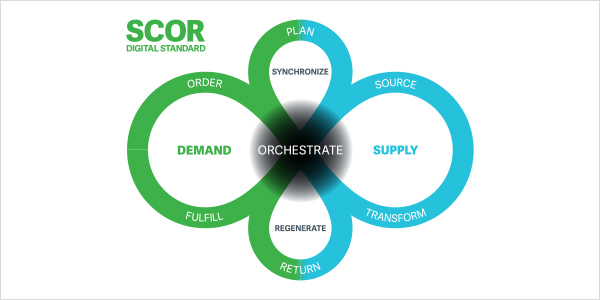
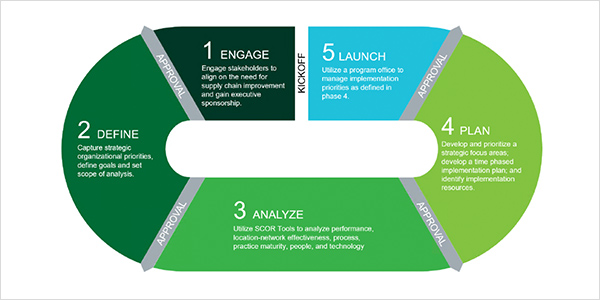
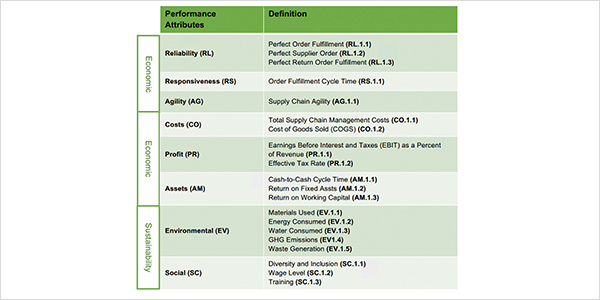
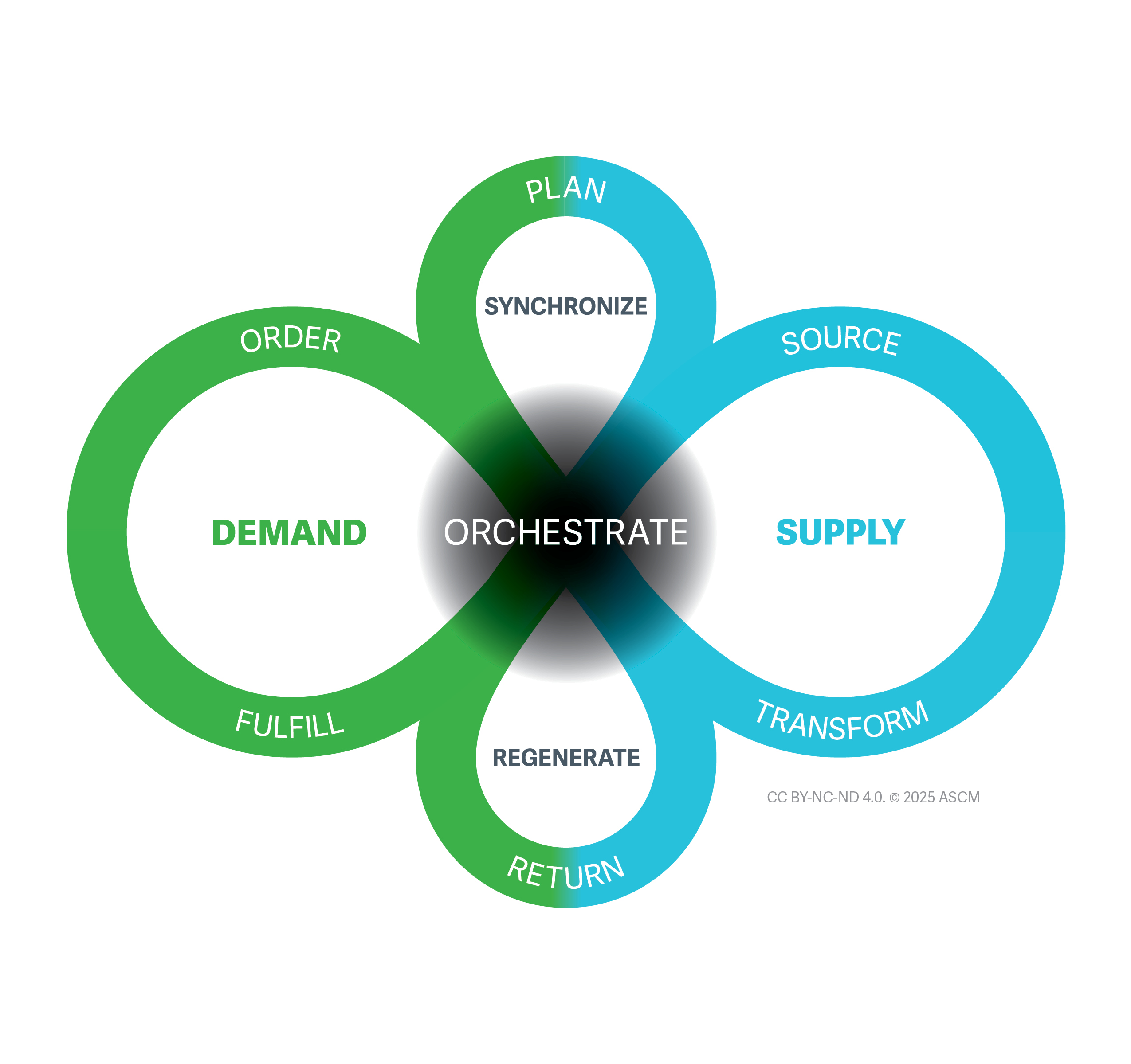
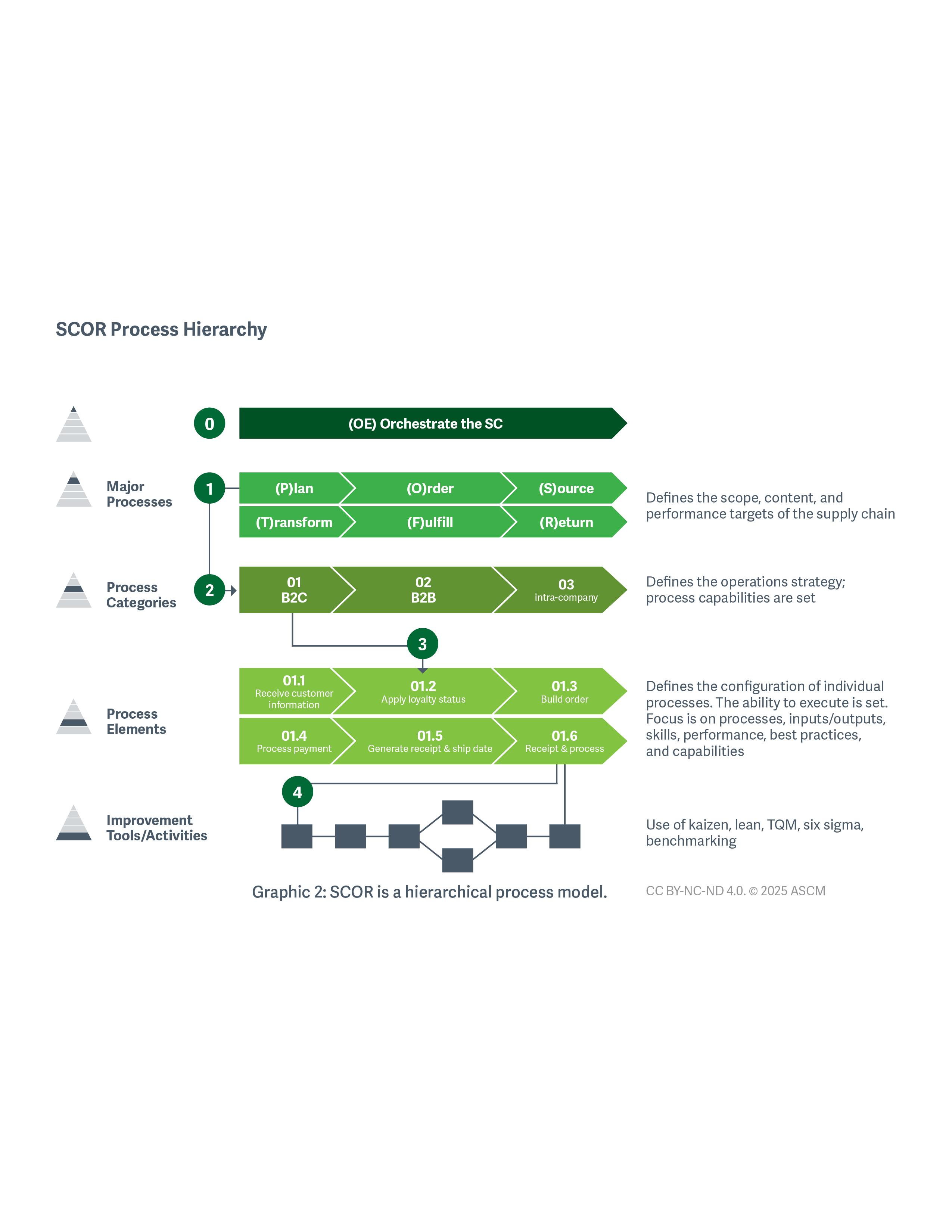
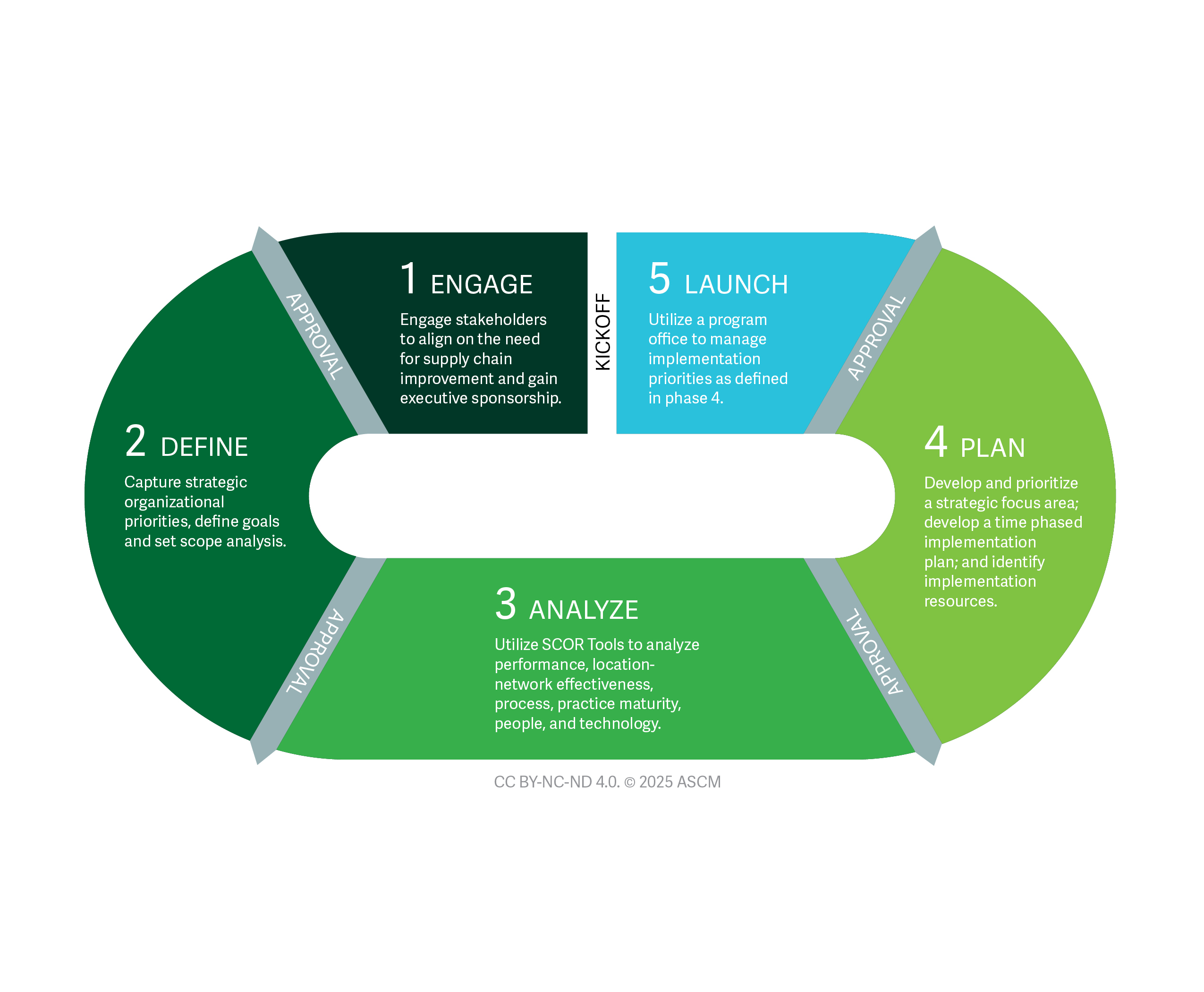
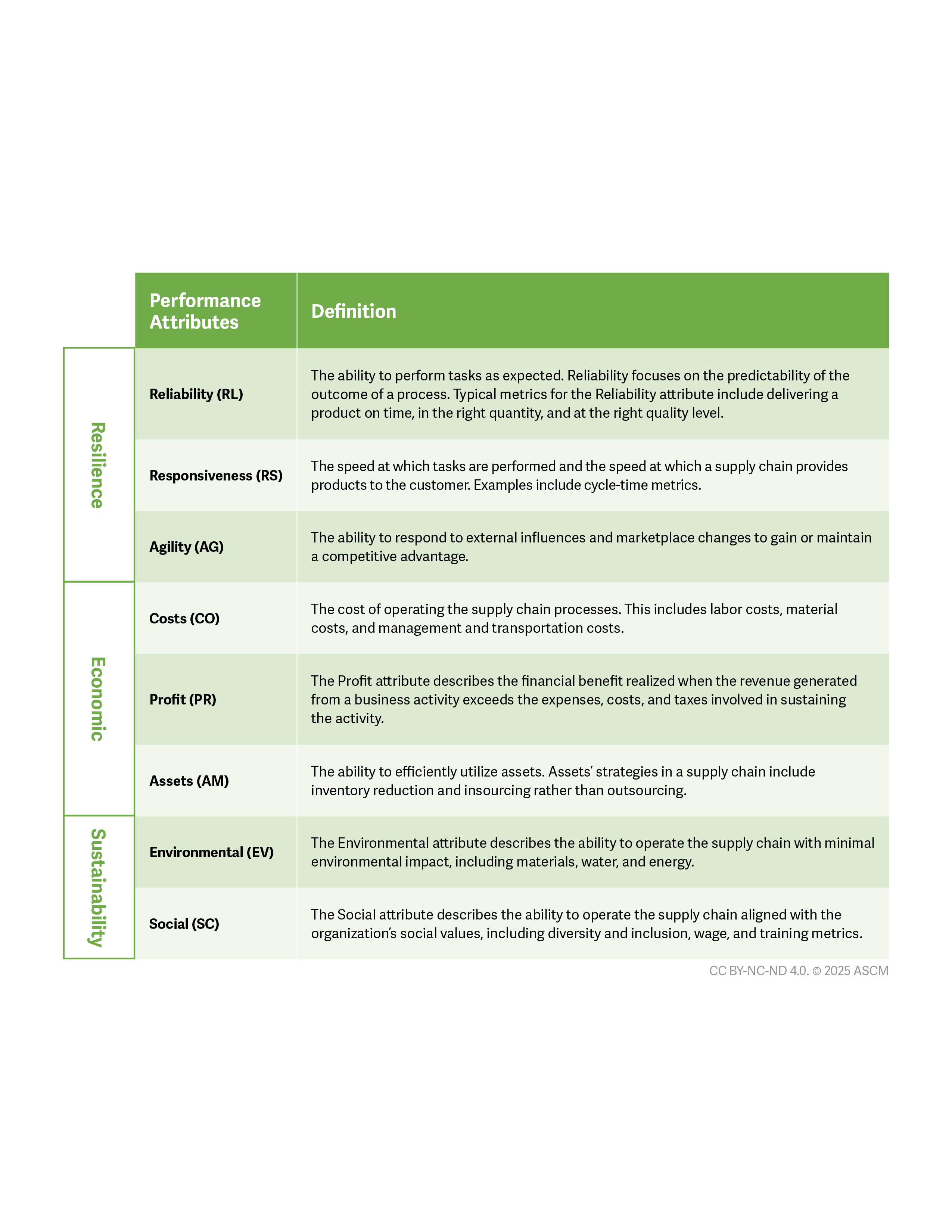
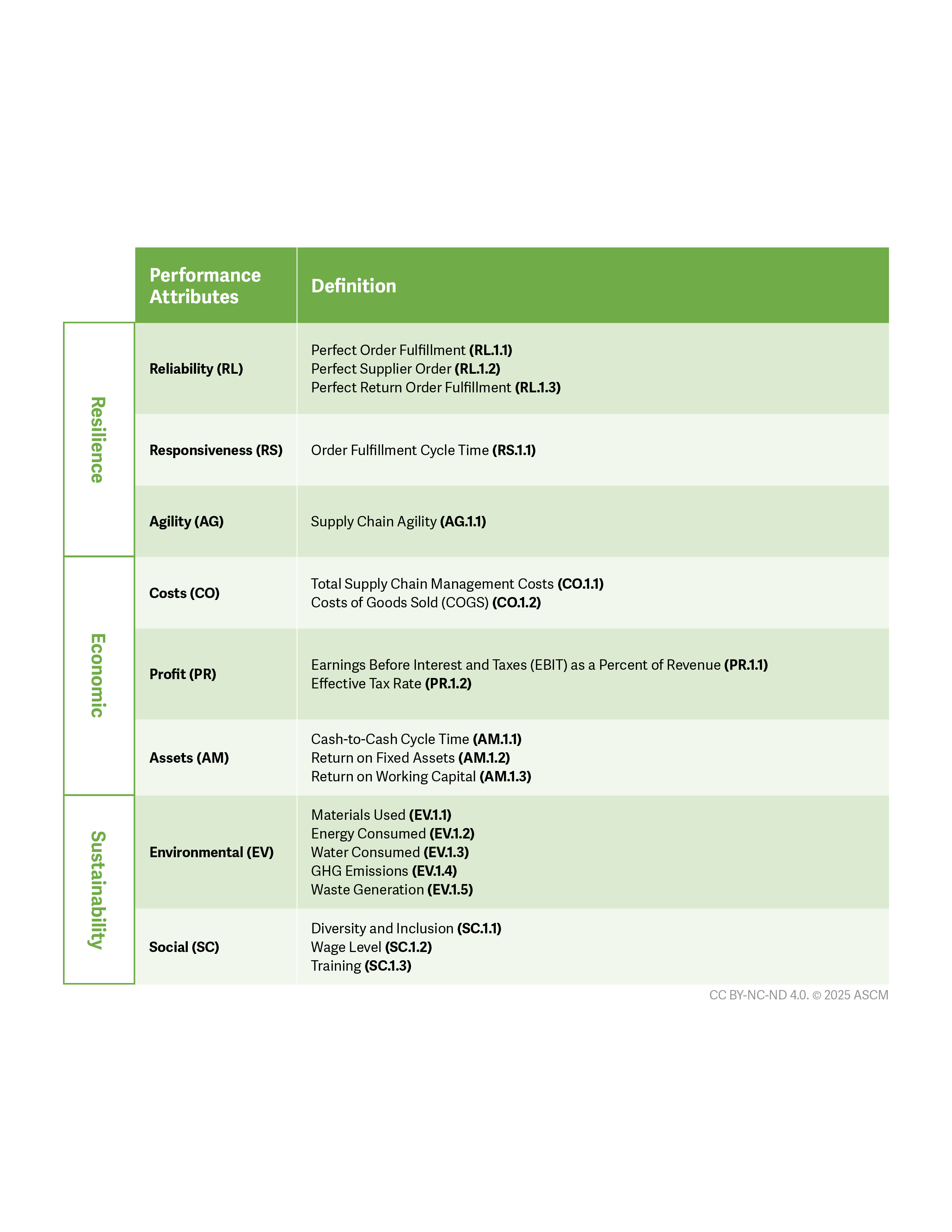
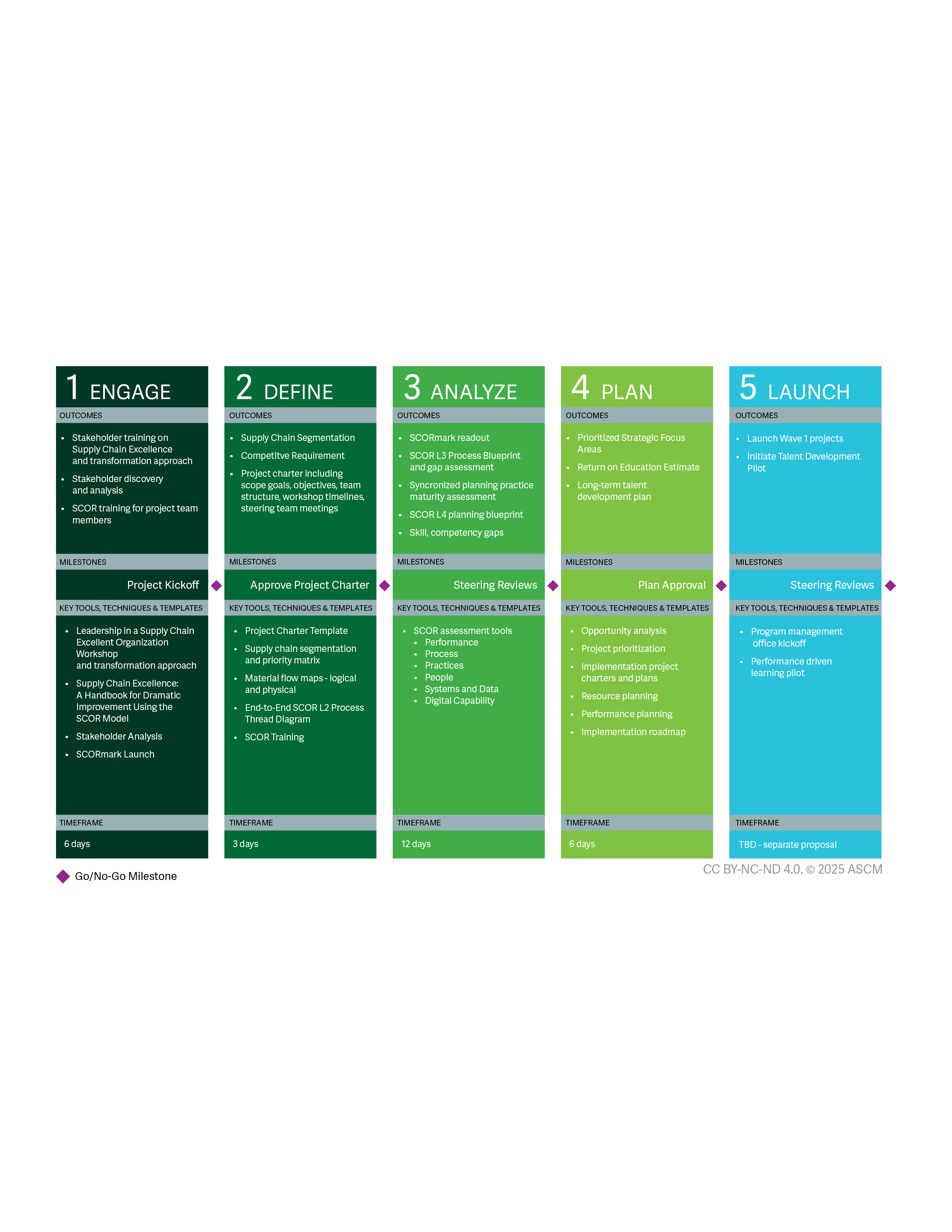
ASCM’s SCOR Image Package is a collection of the six graphics that account for the vast majority of permission requests to reprint over the last three years. These six images include the SCOR cloverleaf, the SCOR racetrack, and their accompanying charts. The images tell the story of SCOR in snapshots.
Do the images appear in the SCOR model, or do I have to download both PDFs? Read More
Yes, the images appear in the SCOR model. However, we’ve isolated the images for your convenience of use, and to provide you with a higher-quality graphic that makes it easier to share.
What is a ShareAlike? Read More
Sharealike is a type of Creative Commons license. Creative Commons ShareAlike offers the ability to allow derivative works to be made from copyrighted work, but the terms of the Creative Commons license that appears on the original work would be applied to the derivative works. Creative Commons describes ShareAlike as follows: “If you remix, transform, or build upon the material, you must distribute your contributions under the same license as the original.” The SCOR model is not licensed under a Sharealike model. A Sharealike model could result in the industry standard being compromised.
Where can I go for more information? Read More
Check out our website at https://www.ascm.org/corporate-solutions/standards-tools/scor-ds/